
Hungarian public media suspends news service

- Stay up to date with the latest news from Hungary by signing up for the free InsightHungary newsletter.
Hungarian public television halts news broadcasts
Hungarian public television suspended its news broadcasts, replacing programming with a message on screen that read: “Public media should not lie. We apologize for having done so for many years! Public media is currently being transformed to ensure that in the future, it remains trustworthy and independent. News services are temporarily suspended. Please stay with us!” During the election campaign, Prime Minister Péter Magyar and other Tisza party politicians repeatedly pledged to end what they described as state-funded party propaganda in the public media if elected.
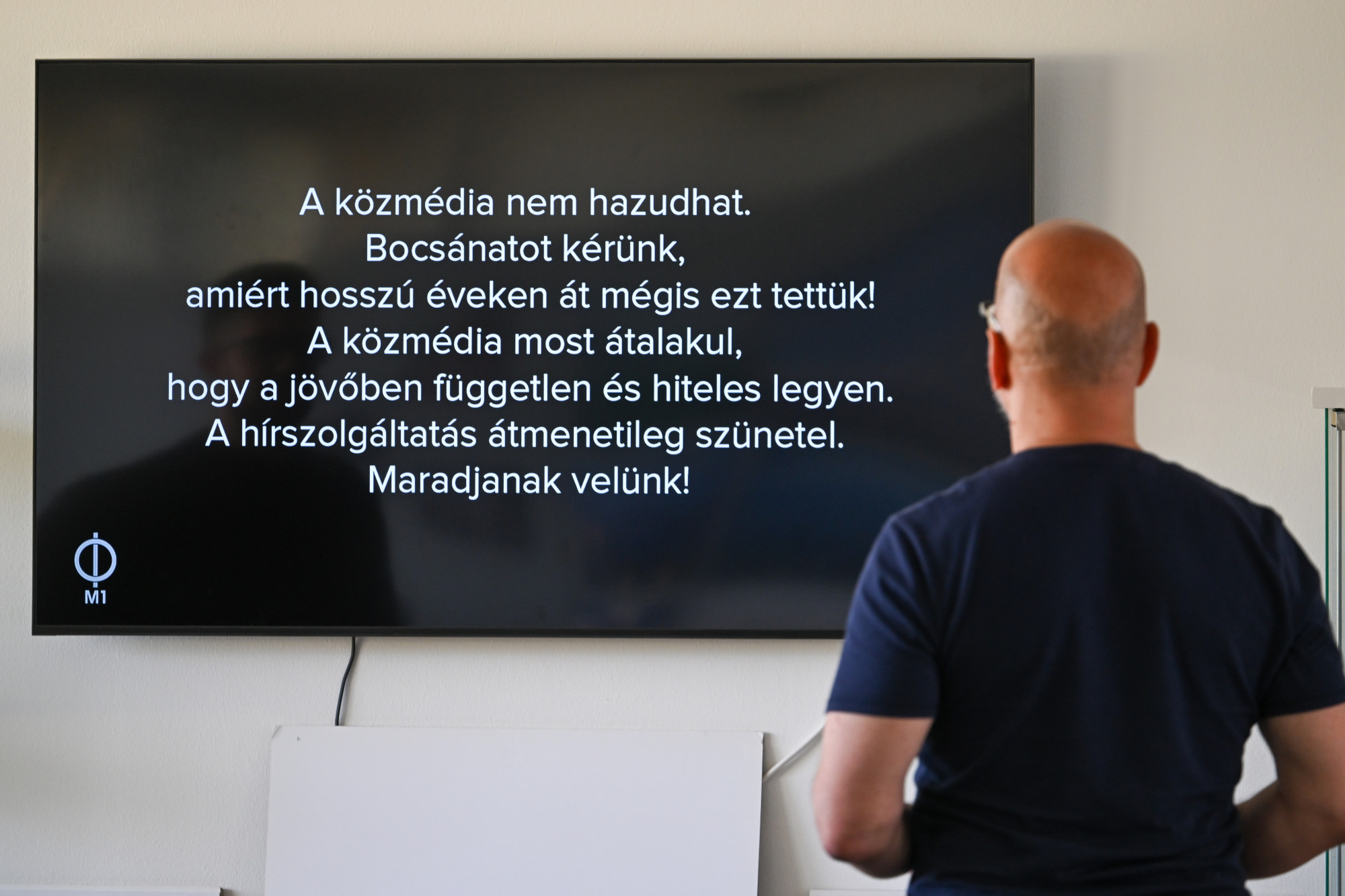
M1, the public broadcaster’s news channel, had served as the flagship outlet of Fidesz’s propaganda tool within MTVA after being transformed into a dedicated news channel during Orbán’s governments. Earlier on Tuesday, András P. Horváth, MTVA’s interim chief executive appointed last week, removed M1 director Zsolt Németh from his post and, according to reports, also dismissed deputy content director Zsolt Mezei.
Hungary revokes asylum for Ziobro and Romanowski
Polish foreign minister Radosław Sikorski said on Thursday that Hungary had revoked the refugee status of former Polish justice minister Zbigniew Ziobro, former deputy justice minister Marcin Romanowski and Ziobro’s wife, Patrycja Kotecka-Ziobro. “I have received written confirmation that Hungary has revoked refugee status for Marcin Romanowski, Zbigniew Ziobro, and Patrycja Kotecka-Ziobro. They have also annulled their travel documents. The wheels of justice grind slowly, but they grind,” Sikorski wrote on X. The move formally reverses the political asylum granted by Viktor Orbán’s previous government. Both Ziobro and Romanowski left Hungary after the April elections.
Romanowski fled to Hungary in 2024 after Polish authorities accused the Law and Justice politician of corruption, including embezzlement of public funds, and was granted asylum by the Orbán government. Ziobro, who also received asylum in January along with his wife, is wanted in Poland on suspicion of founding and leading a criminal organisation that allegedly embezzled 150m zlotys while he served as justice minister. After winning the election, PM Péter Magyar said his government would review the status of politicians granted asylum by the previous administration who were facing convictions or criminal proceedings in their home countries, and later said Hungary would no longer serve as a refuge for internationally wanted suspects. The interior ministry began reviewing such asylum cases in early June, a process that could also affect former North Macedonian prime minister Nikola Gruevski.
Budapest falls four places in global quality of life rankings
Copenhagen was named the world’s most livable city (for the second time) in the Economics Group’s annual ranking. Vienna remains the world’s second most livable city, while Melbourne ranks third. Five factors are ranked on a scale of 0 to 100 (stability, healthcare, culture and environment, education, and infrastructure), and then an average is calculated. The Danish capital won with 98 points, receiving perfect scores of 100 in education, infrastructure, and stability.
Budapest finished in 36th place, which is four spots lower than the previous year, but it is still the highest ranking among the capitals of the post-communist countries of Central and Eastern Europe. The four-place drop is still a strikingly poor result: only six cities fell further in the rankings, five of which are in the Middle East and have been affected by the Iran-Iraq War, such as Doha, Muscat, and Kuwait City.